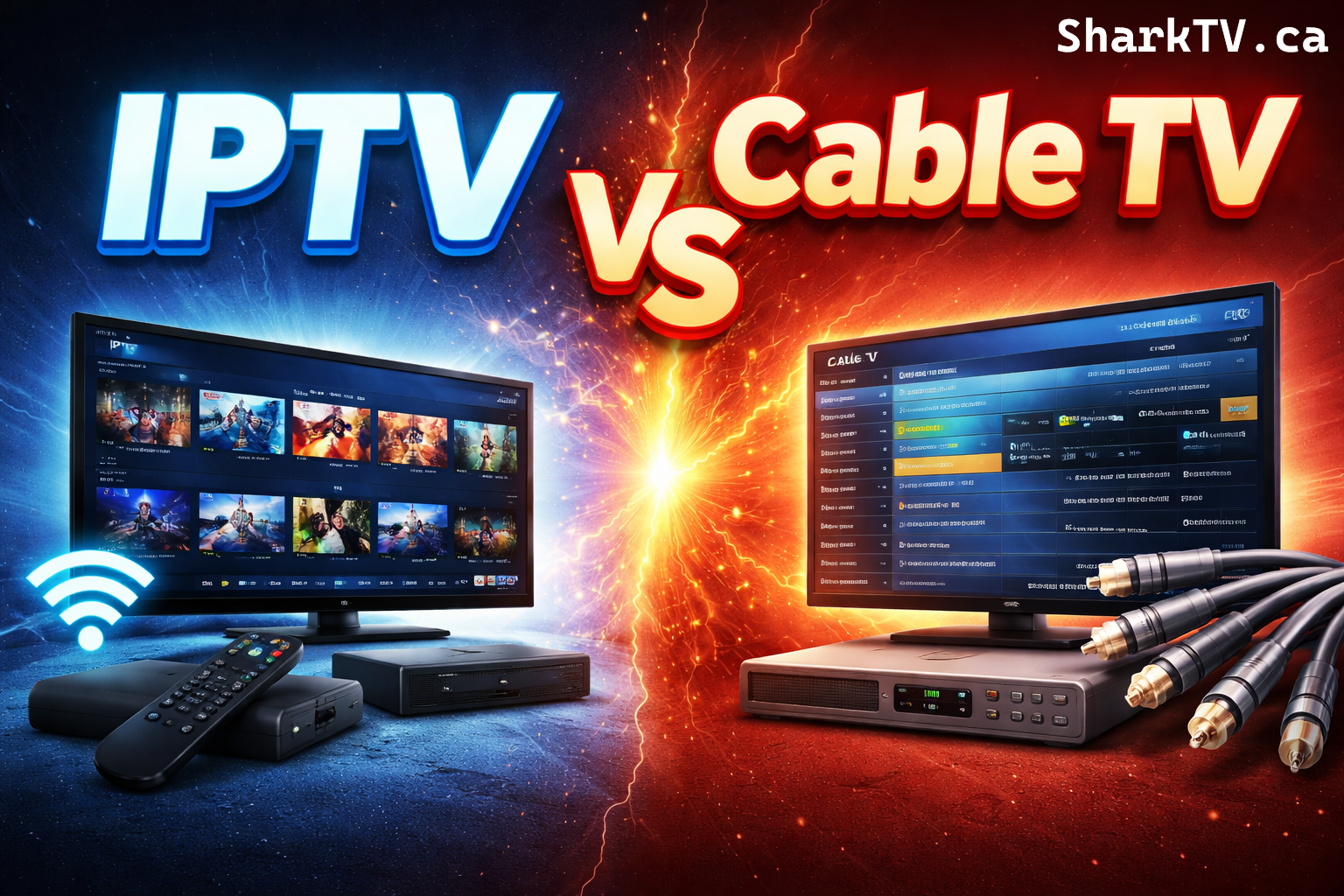
IPTV vs Cable TV: which is better in Canada in 2027? If you're thinking about cancelling your traditional cable television package or looking for a more flexible way to watch live TV, sports, movies, and international channels, understanding the differences between IPTV and cable TV can help you make the right decision.
Traditional cable TV delivers television through a provider's cable network, while IPTV (Internet Protocol Television) delivers programming through internet-based technology. Both can offer live channels, sports, news, movies, and on-demand entertainment, but they differ in pricing, installation, device compatibility, internet requirements, and subscription options.
For Canadian households, the decision often comes down to monthly costs, favourite channels, streaming quality, and whether they prefer traditional television equipment or internet-connected devices such as Amazon Firestick, Android TV, and Smart TVs.
In this updated 2027 IPTV vs cable TV comparison, we'll explain the advantages and disadvantages of each option, compare subscription costs, examine HD and 4K streaming, and help you decide whether switching from cable to IPTV makes sense.
IPTV vs Cable TV: Quick Comparison
The following table highlights the main differences between IPTV and traditional cable television.
| Feature | IPTV | Cable TV |
|---|---|---|
| Delivery | Internet-based streaming | Provider cable network |
| Internet required | Yes | Not necessarily for conventional cable channels |
| Subscription plans | Monthly or longer plans, depending on provider | Monthly billing, packages and possible term agreements |
| Channel selection | Depends on provider and content rights | Depends on cable package and region |
| International channels | May offer international programming | Often available through specialty packages |
| Supported devices | Compatible Smart TVs, streaming boxes, phones and computers | Provider equipment and supported apps |
| Installation | Often app-based | May require provider equipment or installation |
| Video-on-Demand | Depends on subscription | Depends on package |
| 4K content | Available on selected services and streams | Available on selected providers and channels |
| Multi-device viewing | Depends on simultaneous connection limits | Depends on provider equipment and account rules |
Neither technology is automatically better in every category. The best choice depends on the service, programming, household needs, and total cost.
What Is IPTV and How Does It Work?
IPTV stands for Internet Protocol Television. It is a technology that delivers television and video through internet protocol networks.
Instead of receiving channels through a conventional cable television connection, viewers use a compatible device or application to access programming through an internet connection.
Depending on the IPTV Service, features may include:
- Live television channels
- Canadian and international programming
- Sports and entertainment channels
- Movies and television series
- Video-on-Demand (VOD)
- IPTV EPG (Electronic Program Guide)
- Catch-Up TV on supported channels
- Multiple simultaneous connections on eligible plans
Some IPTV subscriptions use Xtream Codes, M3U playlists, or Stalker Portal connections. Compatibility depends on the selected service, device, and application.
For customers comparing different connection methods, browse our M3U IPTV and Xtream Codes options.
What Is Traditional Cable TV?
Traditional cable television delivers programming through a cable network operated by a television service provider.
Customers usually subscribe to a channel package and access television through a compatible receiver, set-top box, or provider-supported application.
Cable TV packages may include:
- Local Canadian television channels
- American television networks
- Sports and entertainment packages
- News and children's programming
- Premium and specialty channels
- On-demand programming
- Bundled internet or telecommunications services
Cable remains a practical option for households that prefer conventional television equipment, established billing arrangements, and provider-managed installations.
IPTV vs Cable TV Cost in Canada: Which Is Cheaper?
One of the biggest reasons Canadians compare IPTV vs cable cost is the possibility of reducing monthly television expenses.
However, comparing only the advertised subscription price can be misleading.
Cable TV Costs
The total cost of cable television may include:
- Base television subscription
- Premium sports or specialty channel packages
- Receiver or equipment rental
- Additional television equipment
- Installation charges where applicable
- Taxes and other applicable fees
IPTV Subscription Costs
The total cost of an IPTV subscription may include:
- Monthly or prepaid IPTV subscription
- Existing internet service
- Streaming device purchase, if needed
- Optional paid IPTV player application
- Additional simultaneous connections
- Taxes or other applicable charges
Some IPTV plans may have lower subscription prices than certain cable packages. However, savings depend on the provider, required channels, internet costs, and equipment.
Example: How to Compare Annual TV Costs
Instead of assuming one service is cheaper, use the following calculation:
Cable annual cost = (monthly cable bill × 12) + additional equipment or installation costs.
IPTV annual cost = subscription payments + required device or app costs + any additional internet costs.
If you already have suitable home internet and a compatible streaming device, your additional IPTV setup costs may be lower. If you need to upgrade your internet plan or purchase multiple devices, the difference may be smaller.
IPTV Subscription Plans vs Cable Contracts
Subscription flexibility is another important difference between IPTV and traditional cable TV.
Depending on the provider, IPTV plans may be offered for:
- 1 month: Short-term access with a smaller initial commitment
- 3 months: A medium-length subscription period
- 6 months: A longer prepaid subscription
- 12 months: Annual access with less frequent renewals
Cable providers may offer month-to-month services, promotional pricing, or term agreements. The exact conditions vary.
Before purchasing any IPTV Contract or cable package, review cancellation terms, refund conditions, promotional price changes, and automatic billing.
If you're choosing a longer IPTV plan, also check how IPTV Renewal works and whether you need to renew manually before the subscription expires.
IPTV vs Cable TV Channels: Which Offers More Variety?
Channel selection is often more important than the advertised number of channels.
Traditional cable packages generally focus on channels available through the provider's Canadian television lineup, with specialty and international options depending on the package.
Some IPTV services offer programming from multiple countries and languages, which can be useful for multicultural households.
International programming may include content from:
- Canada and the United States
- United Kingdom and Europe
- Portugal and other European countries
- Middle Eastern countries
- India, Pakistan, and South Asia
- Latin America
- Africa and other international regions
Actual channel availability varies by subscription and distribution rights. Always verify the channels you want rather than relying on an advertised total.
IPTV vs Cable for Live Sports
Sports fans often compare IPTV and cable based on access to football, hockey, basketball, baseball, cricket, and international sporting events.
Cable providers may offer sports through standard packages or additional premium subscriptions.
IPTV services may offer different sports programming, depending on the provider and the broadcasting rights it holds.
Before switching from cable, confirm that your preferred leagues, teams, and events are available through the replacement service.
Do not assume that every IPTV subscription includes every premium sports channel or competition.
IPTV vs Cable for Movies and Video-on-Demand
Both IPTV and cable services may provide movies, television series, and on-demand entertainment.
An IPTV subscription may include a Video-on-Demand library, depending on the package.
When comparing services, check:
- Movie and television series availability
- Video resolution
- Audio and subtitle languages
- Parental controls
- Content updates
- Electronic Program Guide availability
- Catch-Up TV functionality
The presence of VOD features does not guarantee that every title is available or authorized for distribution.
IPTV vs Cable: Streaming Devices and Compatibility
One advantage of IPTV technology is its potential compatibility with a wide range of internet-connected devices.
Depending on the application and subscription, IPTV may work on:
- Amazon Firestick and Fire TV
- Android TV and Google TV
- Samsung and LG Smart TVs
- Apple TV
- NVIDIA Shield
- BuzzTV and Formuler devices
- MAG and compatible IPTV receivers
- Windows and Mac computers
- Android and iOS smartphones
- Tablets
Traditional cable may also offer mobile or Smart TV applications, but access depends on the provider's supported platforms and account restrictions.
If you plan to use an Android TV box, read our IPTV player apps guide to understand the differences between popular applications.
IPTV Installation vs Cable TV Installation
How Cable TV Is Installed
Traditional cable television may require a provider-supplied receiver, an active cable connection, equipment delivery, or an installation appointment.
The process depends on the provider and whether the home already has compatible equipment.
How IPTV Is Installed
IPTV setup is often completed through a compatible application or streaming device.
- Choose an IPTV service compatible with your device.
- Install the supported IPTV application.
- Receive the required connection information.
- Enter the Xtream Codes, M3U, or portal details as appropriate.
- Allow the application to load the available programming.
- Test the channels and streaming performance.
Some IPTV devices require additional configuration. Always confirm compatibility before purchasing a subscription.
IPTV vs Cable: HD, Full HD and 4K Streaming Quality
Both IPTV and cable television can provide high-definition content, depending on the service and original video source.
Some IPTV services support HD, Full HD, and 4K IPTV streams. However, the advertised resolution does not guarantee that every channel is available in 4K.
IPTV picture quality depends on:
- Original stream resolution and bitrate
- Internet connection speed
- Wi-Fi or Ethernet network quality
- Streaming device performance
- Video codec compatibility
- IPTV server and source performance
Cable picture quality also depends on the broadcaster, provider equipment, and supported video formats.
Does IPTV Buffer More Than Cable TV?
Because IPTV relies on internet connectivity, it can be affected by network congestion, Wi-Fi interference, insufficient bandwidth, and streaming server problems.
Cable television delivered through a conventional television network may be less affected by household internet traffic, although cable services can still experience outages or technical issues.
People searching for bufferless IPTV, buffer free IPTV, or super fast IPTV should understand that no streaming provider can guarantee uninterrupted playback under every condition.
To improve IPTV streaming performance:
- Use Ethernet where possible.
- Maintain a stable internet connection.
- Keep streaming applications updated.
- Avoid heavy downloads during live streaming.
- Restart networking equipment when troubleshooting.
- Check whether the device supports the stream's video format.
If you experience freezing or buffering, read our IPTV buffering and freezing guide for additional troubleshooting steps.
How Much Internet Speed Does IPTV Need?
Internet speed requirements depend on video quality, compression, and the number of simultaneous streams.
Approximate bandwidth requirements for one stream may include:
| Video Quality | Approximate Speed Per Stream |
|---|---|
| Standard Definition | 3–5 Mbps |
| HD | 5–10 Mbps |
| Full HD | 10–15 Mbps |
| 4K | 20–35 Mbps or more |
These are general planning estimates rather than guaranteed requirements. Actual bandwidth needs depend on the streaming source and application.
Households streaming on several televisions at once should account for the combined bandwidth requirements and other internet activity.
Can Multiple TVs Use One IPTV Subscription?
Some IPTV services allow multiple simultaneous streams, but the number of permitted connections depends on the subscription.
For example, a household may want to watch sports in the living room while another family member watches a movie in a bedroom.
This may require a subscription with two or more simultaneous connections.
Installing an IPTV application on multiple devices does not automatically permit unlimited simultaneous streaming.
Can IPTV Replace Cable TV Completely?
For some households, IPTV can replace traditional cable television. For others, cable may remain the better option.
Before cancelling cable, confirm that the replacement IPTV service provides:
- Your preferred local and international channels
- Required sports programming
- Compatible streaming applications
- Suitable picture quality
- Enough simultaneous connections
- Acceptable subscription and renewal terms
- Authorized access to the programming offered
If you depend on certain live channels, emergency information, or specific broadcasts, verify that those services will remain accessible after switching.
IPTV Trial vs Cable TV Trial: Can You Test Before Switching?
Some IPTV providers offer an IPTV trial or shorter subscription period, while cable companies may provide promotional offers or other introductory arrangements.
Where a free IPTV trial is available, it may help you check:
- Application compatibility
- Device setup
- Channel navigation
- Picture quality
- Internet performance
- Connection stability
A trial does not establish that a provider has appropriate content rights. Verify the service's authorization and terms before subscribing.
Advantages and Disadvantages of IPTV
Potential Advantages of IPTV
- Flexible subscription periods on selected services
- Compatibility with different streaming devices
- International channel options where available
- Live TV and Video-on-Demand features
- Remote application-based setup
- Optional multi-connection packages
Potential Disadvantages of IPTV
- Requires an internet connection
- Can be affected by buffering and network problems
- Device and app compatibility may vary
- Some applications require separate fees
- Channel availability can change
- Consumers must verify provider authorization and content rights
Advantages and Disadvantages of Cable TV
Potential Advantages of Cable TV
- Familiar television interface
- Provider-managed equipment and support
- Traditional television delivery may not depend on home Wi-Fi
- Local channel packages
- Internet and television bundles may be available
Potential Disadvantages of Cable TV
- Equipment charges may apply
- Premium channels can increase monthly costs
- Installation or equipment setup may be required
- Channel selection depends on available packages
- Some promotions or plans have specific terms
How to Switch From Cable TV to IPTV in Canada
If you're considering switching from cable television to IPTV, follow these steps before cancelling your existing service.
- List your essential channels: Include local news, sports, movies, and international programming.
- Check your internet: Make sure your connection can support the number of streams you need.
- Choose your device: Confirm compatibility with your Firestick, Smart TV, Android TV box, or IPTV receiver.
- Research providers: Verify content rights, pricing, support, and subscription terms.
- Test the setup: Use a trial or short plan if legitimately available.
- Compare total costs: Include internet, equipment, apps, and connection fees.
- Review your cable agreement: Check cancellation conditions and equipment-return requirements.
- Switch only when ready: Confirm that your replacement service meets your viewing needs.
This approach helps avoid cancelling cable before you know whether your new streaming setup is suitable.
Why Compare IPTV Packages From SharkTV?
SharkTV provides information about multiple IPTV subscription packages rather than presenting only one service option.
Customers can compare available packages based on:
- Subscription duration
- Compatible devices
- Xtream Codes, M3U, or Stalker Portal support
- Available programming
- Simultaneous connection limits
- Pricing and renewal terms
Browse our Top IPTV servers page to explore the available subscription packages and connection methods.
If you're researching a SharkTV IPTV subscription, confirm that the selected package supports your preferred channels and devices before purchasing.
Frequently Asked Questions About IPTV vs Cable TV
Is IPTV better than cable TV in Canada?
IPTV may be better for households that value flexible devices, international programming, and certain subscription options. Cable may be preferable for customers who want provider-managed equipment and conventional television service.
Is IPTV cheaper than cable in Canada?
Some IPTV subscriptions cost less than certain cable packages, but total savings depend on internet service, equipment, apps, premium channels, and additional connection costs.
Can IPTV replace Rogers or Bell cable TV?
A suitable IPTV service may replace a traditional television package for some households, provided it offers the required channels, compatible devices, reliable connectivity, and appropriate content rights.
Does IPTV work without cable?
Yes. IPTV does not require a traditional cable television subscription, but it does require a suitable internet connection.
Does IPTV work on Amazon Firestick?
Many IPTV services support compatible Fire TV devices through appropriate streaming applications. Compatibility depends on the device model, operating system, and connection format.
Can I watch IPTV on a Samsung or LG Smart TV?
Many Smart TVs support compatible IPTV players. Application availability varies by television model, operating system, and region.
Is IPTV good for live sports?
IPTV can provide live sports when the selected service has the appropriate programming rights and supported streams. Check specific channels and competitions before subscribing.
Can IPTV stream in 4K?
Yes. Some IPTV services support 4K streams, but actual quality depends on the original source, device, application, and internet connection.
Does IPTV buffer more than cable?
IPTV can be affected by internet congestion, weak Wi-Fi, or server problems. Conventional cable television may be less affected by home internet traffic, but both services can experience technical issues.
Can I use one IPTV subscription on multiple TVs?
Only when the subscription supports the required number of simultaneous connections. Additional streams may require a different plan or extra charge.
Is IPTV legal in Canada?
IPTV technology is legal in Canada. The legality of an individual service depends on factors including content authorization and applicable laws.
Should I cancel cable before trying IPTV?
It is generally better to confirm device compatibility, channel availability, internet performance, and subscription terms before cancelling your existing television service.
More Questions About IPTV Subscriptions?
If you're still comparing IPTV and cable television, visit the SharkTV IPTV FAQ page for additional information about subscriptions, streaming devices, and setup.
You can also read our IPTV Canada Frequently Asked Questions 2027 guide for more answers to common questions.
Final Verdict: IPTV vs Cable TV in Canada
Is IPTV better than cable TV? The answer depends on your household's viewing habits, budget, preferred channels, internet connection, and streaming devices.
IPTV can be a suitable alternative for customers who want internet-based television, compatible streaming devices, and flexible subscription options. Cable TV remains useful for viewers who prefer a traditional television service with provider-managed equipment.
Before switching, compare total costs, programming availability, connection limits, video quality, subscription terms, and content authorization.
To explore available services, visit IPTV Subscription and compare the different streaming options offered through SharkTV.
Related Products