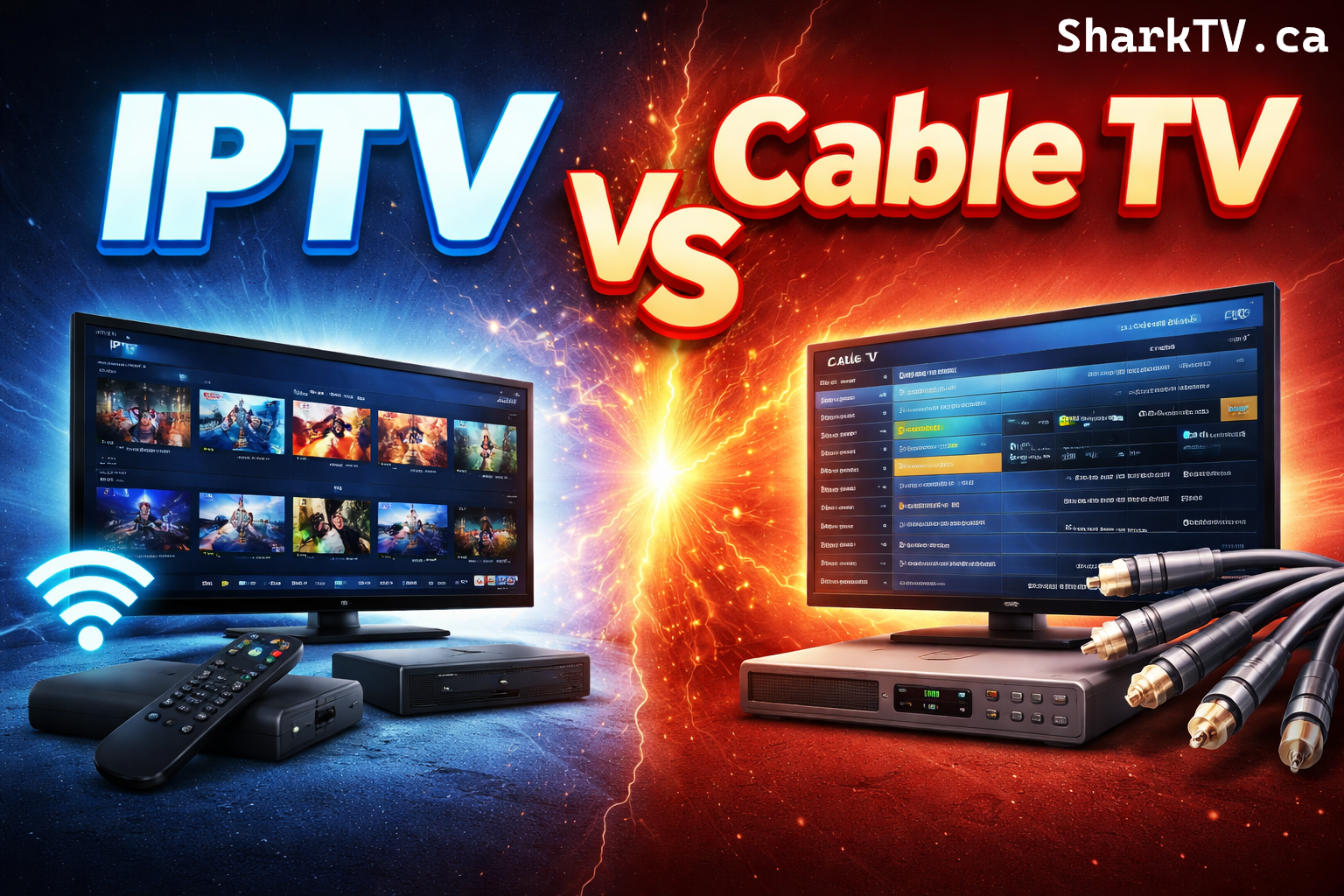
Choosing between IPTV and traditional cable TV depends on how you watch television, the channels you need, your internet connection, and your preferred devices. Cable provides a familiar television experience through a local provider, while IPTV delivers live channels and on-demand entertainment through the internet.
For many modern households, IPTV offers greater flexibility, broader device compatibility, international programming, and more subscription options. Cable may still suit viewers who prefer provider-installed equipment and conventional channel packages.
This guide compares IPTV vs cable TV based on cost, setup, channel selection, contracts, streaming quality, supported devices, and overall convenience.
Quick IPTV vs Cable TV Comparison
| Feature | Cable TV | IPTV |
|---|---|---|
| Delivery method | Cable connection and provider equipment | Internet connection and compatible application |
| Subscription flexibility | May involve fixed packages or contracts | Often available in shorter and longer plans |
| Channel selection | Mainly local and packaged networks | May include Canadian and international channels |
| On-demand content | Depends on the cable package | Frequently included with compatible services |
| Compatible devices | Mainly televisions connected to cable equipment | Smart TVs, Firestick, Android, mobile devices and computers |
| Installation | May require equipment or a technician | Usually completed through an IPTV app |
| Internet required | Not always required for standard television | Required for all streaming |
What Is IPTV?
IPTV stands for Internet Protocol Television. Instead of receiving channels through traditional cable lines or a satellite dish, IPTV delivers television programming through an internet connection.
Depending on the selected service, IPTV may provide:
- Live television channels
- Sports and pay-per-view programming
- Movies and complete TV series
- Canadian and international networks
- Video-on-Demand libraries
- Electronic Program Guide support
- Catch-Up TV on supported channels
IPTV accounts may use Xtream Codes, M3U playlists, or Stalker Portal technology. The correct format depends on the service, application, and streaming device.
What Is Traditional Cable TV?
Cable television delivers channels through infrastructure operated by a local television provider. Customers normally select a channel package and use a receiver or cable box connected to their television.
Cable remains familiar and convenient for some households, but the service may involve:
- Equipment rental fees
- Installation appointments
- Fixed channel packages
- Longer billing commitments
- Additional charges for specialty channels
The exact terms and costs depend on the provider and package selected.
IPTV vs Cable: Subscription Cost and Flexibility
One of the main reasons people compare IPTV with cable is subscription flexibility. Cable packages may combine television, internet, home phone, equipment rental, and specialty-channel charges into one monthly bill.
IPTV services often provide more flexible subscription periods, including:
- 1-month plans
- 3-month plans
- 6-month plans
- 12-month plans
Shorter plans may suit customers testing a service, while longer plans reduce the need for frequent renewals. Pricing varies between IPTV packages depending on server quality, channel availability, connections, and included features.
Browse our Top IPTV in Canada to compare different services and plan lengths.
Channel Selection and International Programming
Cable packages commonly focus on Canadian and American networks, with additional international channels available through specialty packages.
An IPTV service may offer a wider collection of programming from regions such as:
- Canada and the United States
- The United Kingdom and Europe
- The Middle East
- South Asia
- Latin America
- Africa and other international regions
This broader selection can be helpful for multicultural households that want Canadian channels alongside entertainment from other countries.
Live Sports, Movies and Video-on-Demand
Both cable and IPTV can provide live sports, movie channels, news, children's programming, and general entertainment. The exact lineup depends on the package selected.
Many IPTV services also include a Video-on-Demand library containing movies, documentaries, and TV series. This allows viewers to select available content without waiting for a scheduled broadcast.
Before subscribing, customers should compare the available channel list, regional programming, sports coverage, VOD library, EPG, and Catch-Up features.
IPTV Works on More Types of Devices
Traditional cable television is generally connected to a TV through equipment supplied by the cable provider. IPTV can work with a wider range of compatible devices, including:
- Amazon Firestick and Fire TV
- Android TV boxes and Google TV devices
- Samsung and LG Smart TVs
- Apple TV
- BuzzTV, Formuler, Dreamlink and MAG boxes
- NVIDIA Shield and Chromecast
- Windows PCs and Mac computers
- Android phones, iPhones and tablets
Popular IPTV applications include IPTV Smarters Pro, TiviMate, XCIPTV, IM Player, and STB Emu. Compatibility depends on whether the account uses Xtream Codes, M3U, or Stalker Portal login information.
Read our guide to the best IPTV player apps for Android devices before choosing an application.
Installation and Setup
Cable TV Setup
Cable service may require a receiver, physical cable connection, equipment delivery, or a technician appointment. Additional televisions may also require extra equipment.
IPTV Setup
IPTV setup is normally completed through a compatible app and can often be done remotely:
- Choose an IPTV subscription.
- Install the recommended IPTV application.
- Enter the supplied login or portal details.
- Wait for the channels and program information to load.
- Begin streaming.
The exact installation method depends on the device and account format. Customers should confirm compatibility before placing an order.
Streaming Quality and Internet Requirements
Cable television uses the provider's television network, while IPTV depends on the quality of the viewer's internet connection and home network.
IPTV may provide HD, Full HD, and 4K streaming where supported. Actual performance depends on several factors:
- Internet speed and stability
- Wi-Fi signal strength
- Number of devices using the network
- Streaming device performance
- Selected IPTV application
- Quality of the original channel or video source
A wired Ethernet connection or a strong Wi-Fi signal can improve performance. Customers experiencing playback problems can read our IPTV freezing and buffering troubleshooting guide.
Multi-Device and Simultaneous Streaming
Some IPTV services support multiple simultaneous connections, allowing household members to watch different programs on separate devices at the same time.
For example, one person may watch sports on a Smart TV while another watches a movie on a tablet. The number of allowed connections depends on the subscription, and extra connections may require an additional charge.
Customers should never assume that one IPTV subscription automatically permits unlimited devices or simultaneous streams. The connection limit should be confirmed before ordering.
Advantages of IPTV
- Flexible subscription periods
- Canadian and international channel options
- Live TV and on-demand entertainment
- Compatibility with many modern devices
- Remote setup without a cable installation appointment
- Multiple account formats and IPTV applications
- Multi-connection options on selected packages
Advantages of Cable TV
- Familiar channel guide and provider equipment
- Professional installation may be available
- Television service does not always depend on home Wi-Fi
- Local billing and bundled telecommunications services
- Suitable for customers who prefer a traditional setup
Is IPTV Better Than Cable TV?
IPTV can be a better option for viewers who value flexible plans, international programming, on-demand content, and support for multiple types of devices. Cable may be better for customers who prefer conventional television equipment, local provider bundles, and a professionally installed service.
Neither option is automatically best for everyone. The right choice depends on:
- Your preferred channels and regions
- Your internet connection
- The devices you want to use
- Your need for multiple connections
- Your preferred subscription length
- Your budget and viewing habits
Why Compare IPTV Packages from SharkTV?
SharkTV offers multiple IPTV servers and subscription options rather than limiting customers to a single package. This makes it easier to compare services based on price, streaming technology, supported devices, content selection, connection limits, and subscription duration.
Available options include services using Xtream Codes, M3U playlists, and Stalker Portal technology. Customers can choose plans compatible with Firestick, Android TV, Smart TVs, BuzzTV, Formuler, MAG boxes, Apple TV, computers, and mobile devices.
Visit the IPTV Canada Plus Canadian IPTV provider to get your IPTV subscription right away or Chat with one of the Shark TV's agents if you need help.
Frequently Asked Questions About IPTV vs Cable
Is IPTV always cheaper than cable?
IPTV plans may cost less than some traditional cable packages, but pricing varies by provider, subscription length, server, number of connections, and included features.
Does IPTV work on Amazon Firestick?
Many IPTV services work on Amazon Firestick using compatible applications. The correct app depends on the format of the IPTV account.
Can IPTV be used on a Smart TV?
Many Samsung, LG, Android, and Google-powered Smart TVs support IPTV applications. Availability varies by television model, operating system, and region.
Does IPTV require an internet connection?
Yes. IPTV streams live television and on-demand content through the internet, so a stable connection is required.
Can several people watch IPTV at the same time?
Only when the selected package permits multiple simultaneous connections. Customers should confirm the connection limit before ordering.
Can IPTV completely replace cable?
It may replace cable for viewers who can find the content, device support, and features they need through an IPTV service. The decision depends on individual viewing requirements.
Final Thoughts
The choice between IPTV Canada and cable TV comes down to flexibility, content, device compatibility, internet quality, and personal preference. IPTV offers a modern internet-based viewing experience, while cable provides a traditional television setup through an established local provider.
Before switching, compare channel availability, supported devices, account type, connection limits, subscription periods, and streaming requirements. Choosing the right service is more important than simply selecting whichever option claims to offer the most channels or the lowest price.
Related Products